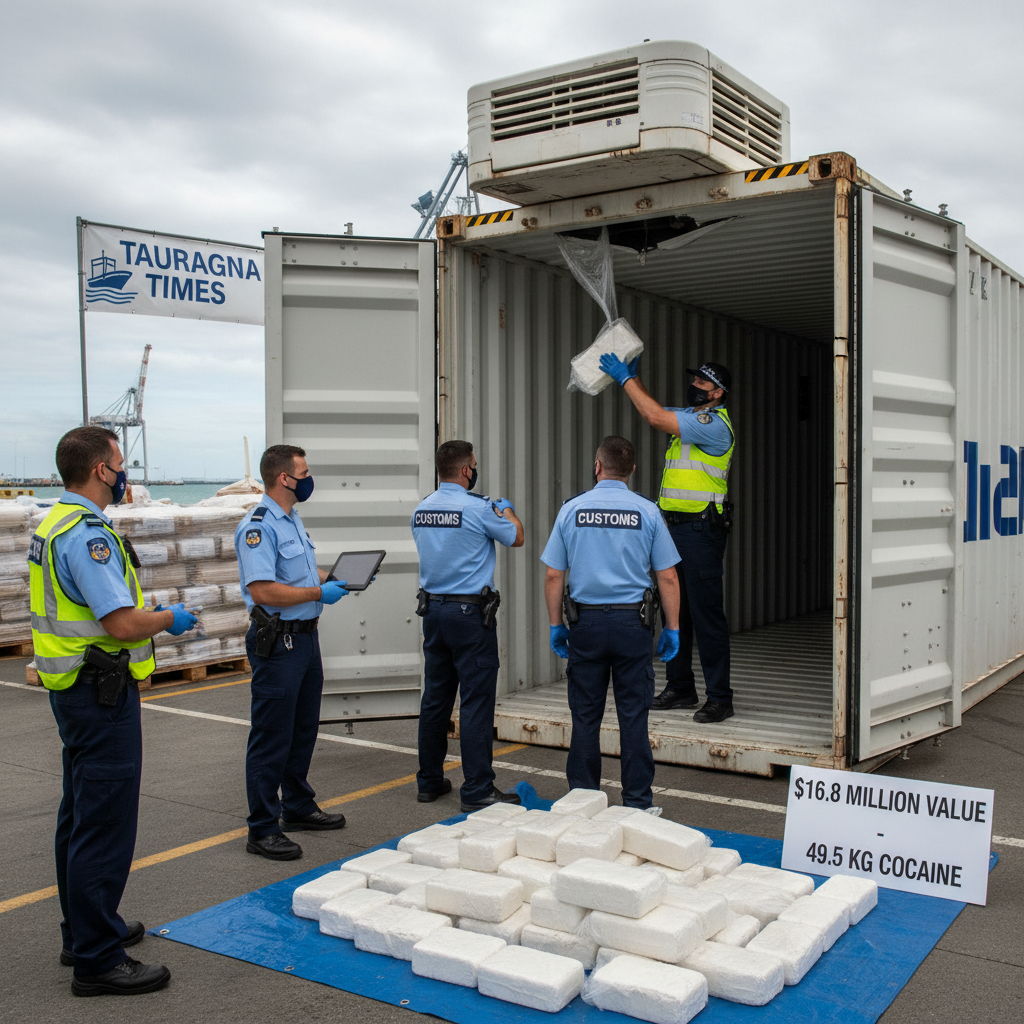
New Zealand Customs has seized nearly $17 million worth of cocaine in a sophisticated smuggling attempt at the Port of Tauranga, marking a significant blow to a transnational drug syndicate.
Officers discovered 48 kilograms of the Class A drug, with an estimated street value of $16.8 million, concealed within a refrigerated container that had arrived from Balboa, Panama. The container was carrying a legitimate shipment of goods, with the drugs intricately hidden from plain sight.
The discovery is one of the more elaborate concealment methods Customs has encountered, signalling a strategic shift by organised crime groups. The cocaine was not simply placed within the container, a method known as 'rip-on, rip-off', but was carefully embedded between the inner ceiling and the outer roof in the container’s insulated lining.
This level of complexity highlights the lengths international criminal networks are going to in their efforts to breach New Zealand's borders. The Port of Tauranga, as the country's largest and busiest port, remains a primary target for such organisations seeking to exploit commercial trade routes for illicit gains. This recent seizure underscores the constant pressure on border agencies to adapt to evolving threats.
Sophisticated concealment method
Customs group manager maritime, Paul Campbell, says the elaborate concealment method reflects a deliberate effort by crime groups to exploit commercial pathways and avoid detection. He notes that such attempts reinforce the need for continuous evolution in detection and disruption strategies.
This method of concealment signals the lengths crime groups are going to in attempting to move drugs through the supply chain. It reflects a deliberate effort to exploit commercial pathways and reinforces that while we are making it harder for them, we must constantly evolve how we detect and disrupt these threats.
The container's origin in Panama is significant. The Central American nation is a major transit point for cocaine produced in South America and destined for markets in North America, Europe, and Oceania. Drug cartels frequently use commercial shipping containers to move vast quantities of narcotics across the globe, often hiding them within legitimate cargo to minimise suspicion.
A 'hostile environment' for smugglers
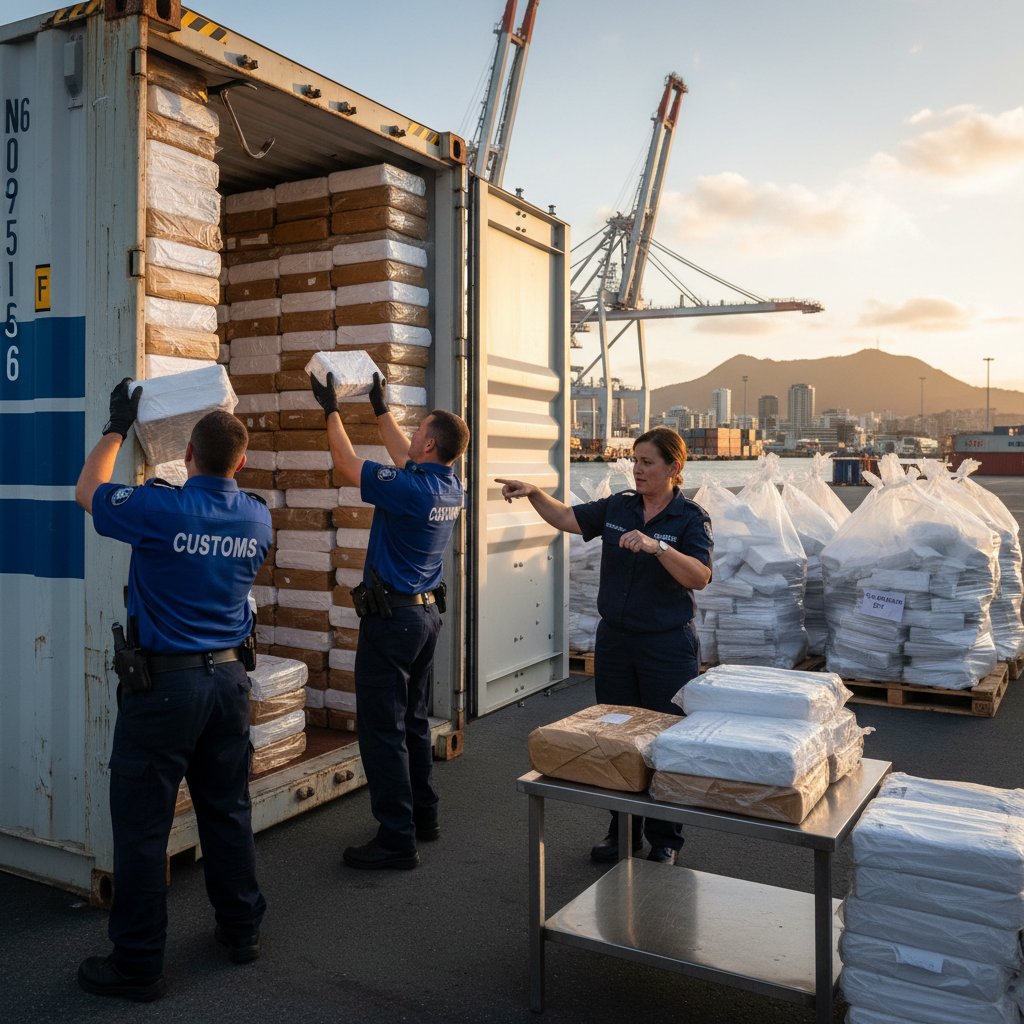
This significant seizure is not an isolated incident for the Port of Tauranga. The port has been the site of several major drug busts in recent years, demonstrating its strategic importance to both international trade and, unfortunately, international crime syndicates. These incidents have included multimillion-dollar methamphetamine seizures, leading to arrests both in New Zealand and abroad.
Mr Campbell says Customs is committed to applying "sustained pressure at the maritime border" to make New Zealand’s seaports a 'hostile environment for criminal networks'. This proactive stance involves intelligence sharing with international partners, sophisticated risk assessment of incoming vessels and cargo, and intensive physical inspections.
The seizure also comes as authorities report a concerning rise in cocaine consumption across New Zealand. Recent wastewater testing data released by police showed a significant surge in cocaine use in late 2025. According to ESR, which manages the national wastewater drug testing programme, this method provides valuable, near real-time data on drug consumption trends that is independent of law enforcement statistics. This growing demand locally makes New Zealand an increasingly lucrative market for international drug traffickers.
The social cost of a drug like cocaine is immense, contributing to addiction, health crises, and a rise in associated crimes. Officials estimate that this 48kg seizure has prevented more than $50 million in potential social harm. While incidents such as the recent armed police response near a Tauranga school are not directly linked, the presence of hard drugs in a community often correlates with a rise in serious crime.
Public vigilance urged
Customs officials are urging port workers, people in the shipping industry, and the general public to remain vigilant and report any suspicious activity. Information plays a crucial role in intercepting these illicit shipments and dismantling the criminal organisations behind them. Officials in Australia have also recently disrupted a major trafficking plot, highlighting the ongoing and connected nature of organised crime across Oceania. While local councils focus on civic issues, like the Auckland Council's launch of an AI assistant, national agencies remain locked in a battle with these international networks, as demonstrated by the recent news that Aucklanders were warned to avoid travel as Cyclone Vaianu approaches.
Mr Campbell affirmed Customs' dedication to protecting the border. "Customs will continue to apply sustained pressure at the maritime border and is committed to making New Zealand’s seaports a hostile environment for criminal networks," he says. The agency encourages anyone with information about potential drug smuggling to come forward, promising confidentiality and the option for anonymity.
Suspicious activities can be reported confidentially to 0800 WE PROTECT (0800 937 768) or anonymously through Crimestoppers on 0800 555 111. No arrests have been announced in connection with the seizure, and the investigation is ongoing.