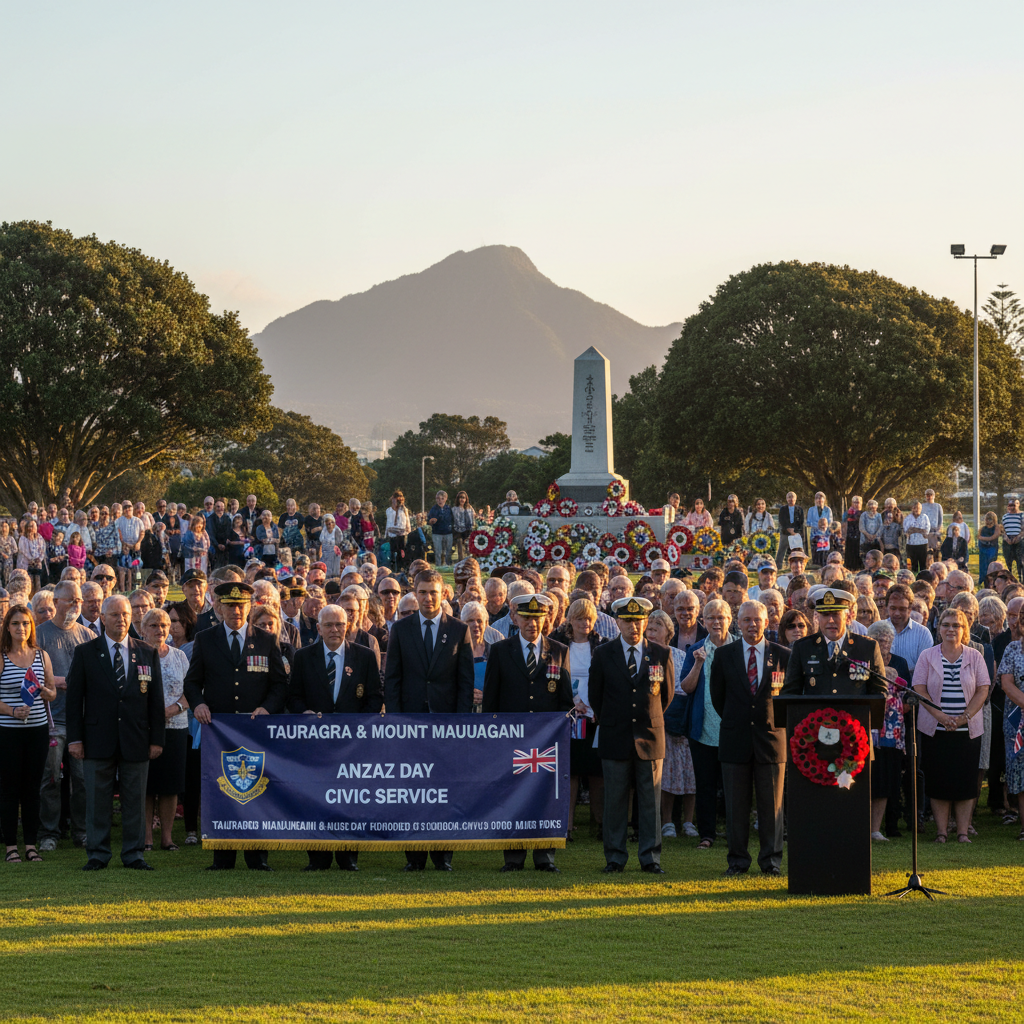
A sea of thousands has gathered in the pre-dawn darkness at the base of Mauao, Mount Maunganui, to pay their respects to the fallen soldiers of Australia and New Zealand. The solemn Anzac Day dawn service at the Mount Maunganui Cenotaph drew one of the largest crowds in recent memory, as locals stood shoulder-to-shoulder in a moving display of remembrance.
The service began with the traditional parade of veterans and service personnel, their medals gleaming in the dim light, marching to the cenotaph. The air was still and silent, filled only with the sounds of the ceremony: the reciting of the Ode of Remembrance, the playing of the Last Post by a lone bugler, and a minute of silence for quiet reflection. Wreaths were laid at the foot of the cenotaph by representatives from community groups, local dignitaries, and families honouring their ancestors.
This year’s commemoration was particularly significant as it was the first time Tauranga’s civic services were a combined event, bringing together residents from across the city to one central remembrance ceremony. The decision to consolidate the services appears to have been embraced by the community, judging by the immense turnout.
A tribute from the skies
As the first light of dawn broke over the horizon, the crowd turned their faces to the sky for the annual Anzac Day flyover. In a much-anticipated tradition, two Yak-52 Russian trainer aircraft from the local Classic Flyers museum roared overhead. The distinctive sound of their engines echoed across Pilot Bay, a powerful auditory salute to the aviators and all who served.
The flyover is a cherished part of the Mount Maunganui service, a contribution from the volunteer-run aviation museum that preserves and showcases historic aircraft. For many, the sight and sound of the planes have become as integral to the morning's proceedings as the Ode itself, connecting the region's aviation history with this solemn day of national remembrance.

A community united in grief and remembrance
The large gathering also felt especially poignant for a community that has recently come together to mourn. Just months ago, residents gathered to remember the victims of the tragic landslide on the slopes of Mauao itself. That event, which left a deep scar on the local landscape and community, was marked with its own ceremonies, including an honour guard from The Royal New Zealand Air Force’s Black Falcons aerobatic team. This Anzac Day service, therefore, felt like more than just a historical remembrance. It was a testament to the resilience of the Mount Maunganui and Pāpāmoa communities, a public demonstration of solidarity in the face of both historical and recent loss. The act of gathering together has become a powerful symbol of unity for the city. From honouring the courage of soldiers in impossible situations abroad to supporting neighbours through tragedy at home, remembrance is a cornerstone of the Tauranga community, as recently seen when Bunbury remembered its fallen ahead of Anzac Day.
The sacred ground of Mauao
The choice of Mauao as the backdrop for this service is deeply significant. The iconic mountain is not just a landmark; it is the ancestral heart of the region. For the iwi of Tauranga Moana, including Ngāti Ranginui, Ngāi Te Rangi, and Ngāti Pūkenga, Mauao is a sacred taonga, rich with history and tradition. According to legend, the mountain was once a nameless peak who, spurned in love, asked forest fairies to drag him to the sea, where they left him at sunrise at the entrance to the harbour.
The mountain itself has been a silent witness to centuries of history, from its origins as a fortified pā, a testament to the ingenuity and courage of early Māori, to its current role as a beloved public space and a site of solemn commemoration. Holding the Anzac service at its base serves as a powerful link between the many layers of Tauranga’s history, honouring all who have defended the land, from the Battle of Gate Pā to the shores of Gallipoli.
As the service concluded and the crowd began to disperse, many families remained, pausing for a moment of quiet reflection by the cenotaph. The presence of multiple generations, from elderly veterans to young children, ensures that the legacy of the Anzacs, and the importance of remembering their sacrifice, will continue to be passed down. The national day of remembrance remains a vital part of New Zealand's identity, as explained by the Royal New Zealand Returned and Services' Association.