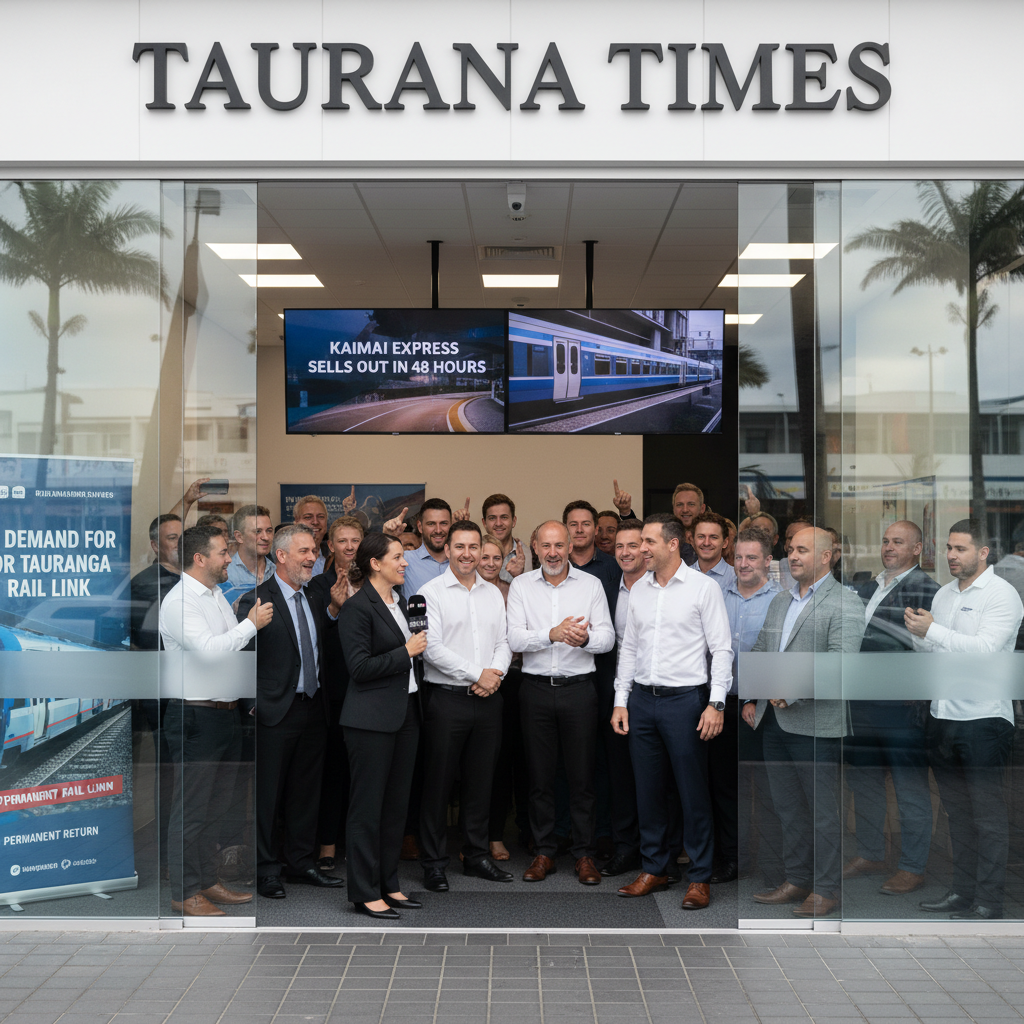
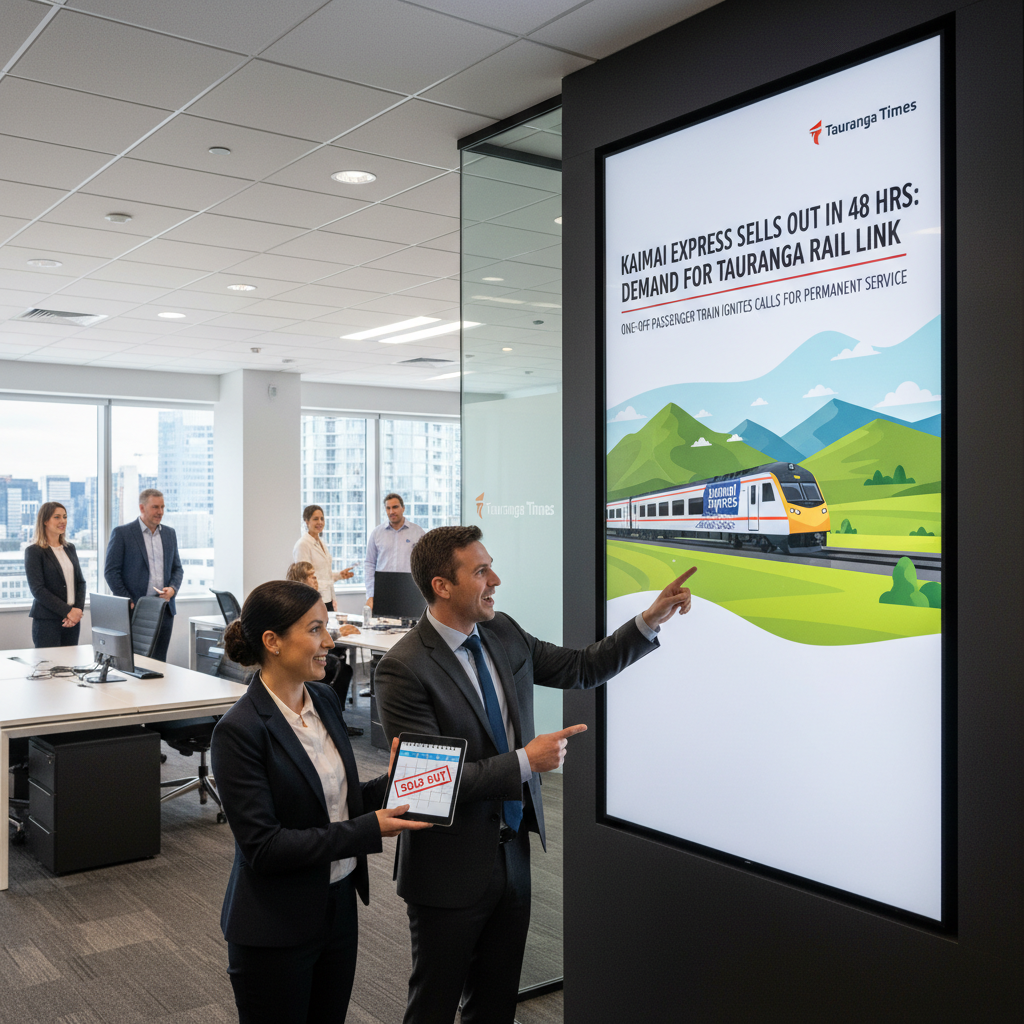
A special passenger train service to Tauranga, the first in years, has sold out within 48 hours of tickets going on sale, a response that advocates say proves the public’s desire for a permanent rail connection to Auckland and Hamilton.
The Kaimai Express, a heritage excursion run by Glenbrook Vintage Rail, will travel from Auckland through Hamilton to Tauranga on Saturday, 2 May. The overwhelming demand for seats, which occurred with minimal paid advertising, is being hailed as a "wake-up call" for restoring passenger rail to the rapidly growing Bay of Plenty.
Tauranga has been without a scheduled passenger train service since the Kaimai Connection was cancelled in 2001, ending a long history of rail in the region. The sell-out success of the excursion has intensified calls to make the city a key part of New Zealand’s passenger rail network once more.
A long history and a 25-year gap
The journey to bring rail to the Bay of Plenty was a long one, with initial proposals dating back to the 1870s. According to the Tauranga Historical Society, the first train officially crossed the bridge and entered the city in the early 20th century, marking a significant milestone in its development. For decades, rail was a vital link for passengers and goods, but the last regular service, the Kaimai Connection, ceased operations in 2001.
The fact that this train sold out in 48 hours shows that there is public support for a passenger train connection, especially in a city that is growing as fast as ours.
In the 25 years since, Tauranga's population has surged, making it one of New Zealand's fastest-growing cities. However, its public transport infrastructure has not kept pace, leaving residents heavily reliant on private vehicles and an increasingly congested road network.
Lindsey Horne, spokesperson for the advocacy group The Future Is Rail, says the city's transport options have been "stuck in the past" while the population has exploded. The demand for the Kaimai Express, she argues, demonstrates a significant appetite for change and a desire for more resilient and sustainable travel options.
The 'missing link' in the Golden Triangle
The rail line between Auckland, Hamilton, and Tauranga forms the "Golden Triangle," a region that is home to approximately half of New Zealand's population and is a powerhouse of economic activity. Despite significant investment in rail infrastructure in the other two centres, including Auckland's City Rail Link and the successful Te Huia service connecting Hamilton to Auckland, Tauranga remains the "missing link" in the national network. In related news, Auckland Transport appoints Stacey van der Putten interim chief executive.
Advocates suggest that with much of the necessary track infrastructure already in place for freight, extending the Waikato’s Te Huia service to Tauranga is a logical and necessary next step. Such a connection would not only benefit commuters, business travellers, and students but also boost tourism by linking the country's largest city directly to one of its premier coastal destinations. Details on everything the region has to offer can be found in the ultimate guide to Tauranga.
Safety and congestion on the Kaimai Range
The call for rail is not just about convenience. it is also about safety. State Highway 2, particularly the stretch over the Kaimai Range, is notorious for its high crash rate and crippling congestion, especially during holiday periods. The winding, often treacherous road is a major source of anxiety for many travellers. The Waka Kotahi NZ Transport Agency has identified the corridor as a key area for safety improvements, but progress has been slow.
Rail offers a high-capacity, lower-emission alternative that could significantly reduce the number of cars and trucks on the road. This would not only improve safety but also help lower the country’s carbon footprint, aligning with national climate goals. For a region that has experienced the disruptive power of sudden and wild weather events, building more resilient infrastructure is becoming increasingly critical.
A vision for a local network
Beyond the inter-city connection, The Future Is Rail envisions a future where a commuter rail network serves the wider Tauranga area. The existing rail corridor could be leveraged to connect growing communities like Ōmokoroa, Pāpāmoa, and Te Puke directly with the Tauranga CBD, offering a way to bypass daily traffic bottlenecks on the city's strained road network.
While questions around the cost and funding of such projects remain a significant hurdle, advocates are confident the public demand is there to justify the investment. As growth puts ever more pressure on the region's infrastructure, the debate over rail is set to intensify. The upcoming arrival of the Kaimai Express will give residents a tangible glimpse of what that future could look like.
“We are seeing families, students, and business people all asking for the same thing: choice,” says Horne. “This trip proves that the infrastructure is sitting there waiting to be used, and the community is standing on the platform ready to board. We just need action.”
Event details
The Kaimai Express is scheduled to arrive at the railway platform on The Strand/Dive Crescent in Tauranga’s CBD at 1:00 PM on Saturday, 2 May. Hundreds of passengers are expected to disembark for an afternoon in the city, providing a preview of the economic benefits a regular service could bring.