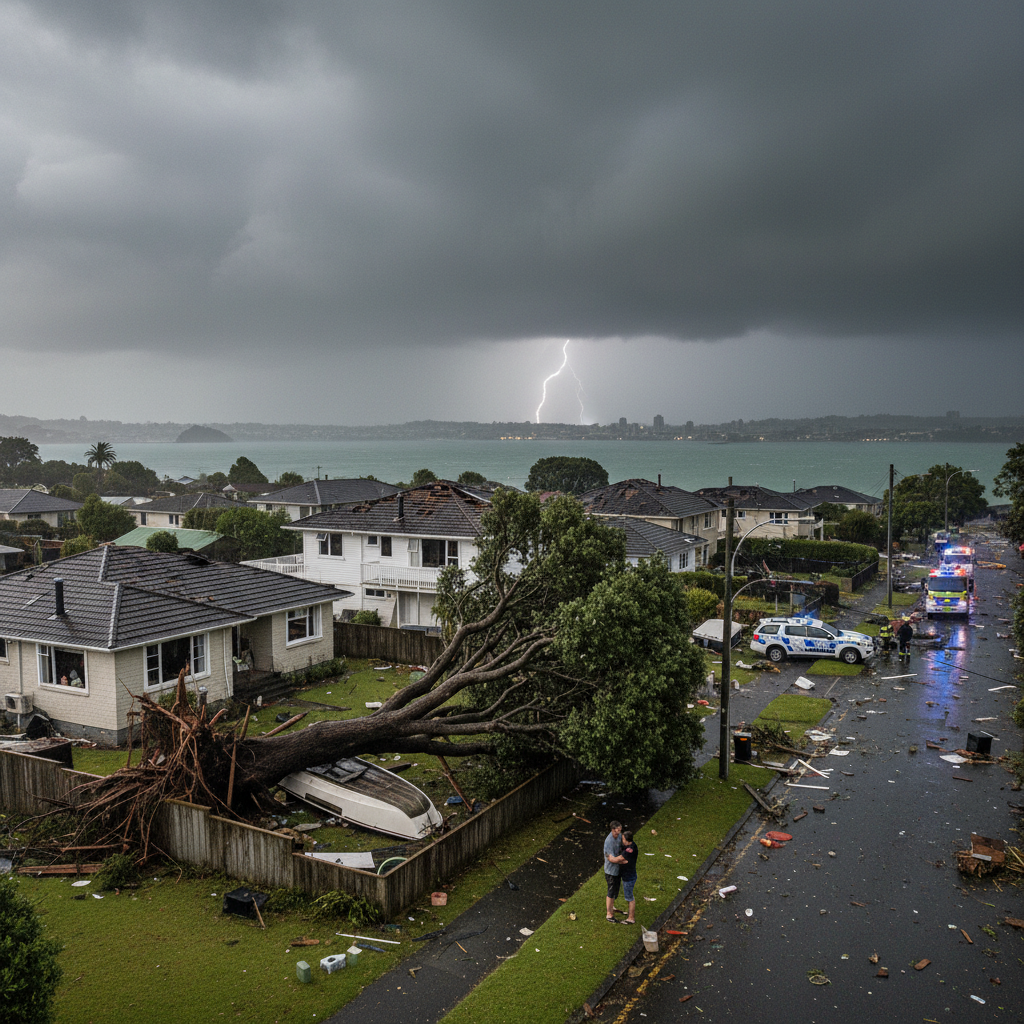
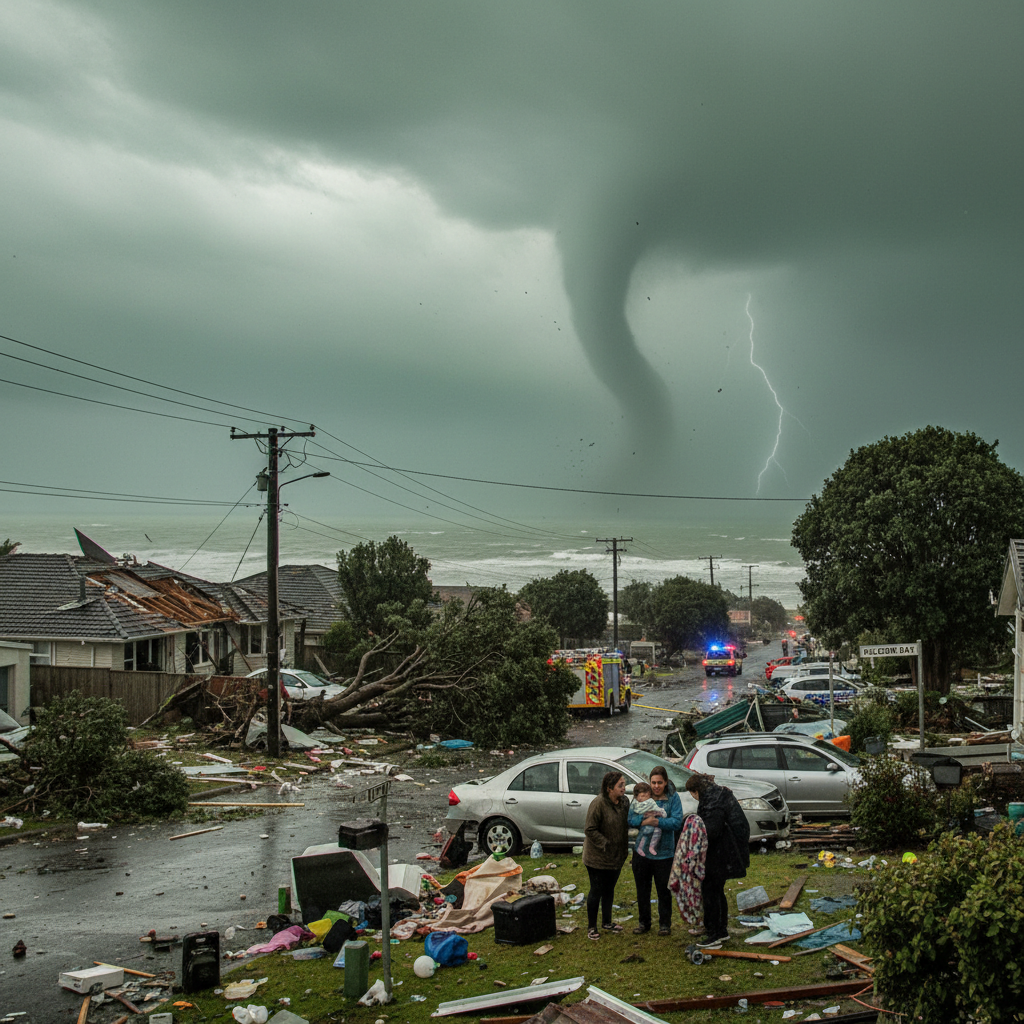
Residents in Welcome Bay are cleaning up after a "powerful and ferocious" tornado struck without warning on Sunday morning, damaging homes and terrifying locals as a spate of wild weather continues to batter the Bay of Plenty.
The tornado carved a path through the Tauranga suburb, with residents waking to the sound of smashing glass and debris flying through the air. Maungatapu Marae was among the properties impacted by the sudden event.
The lack of any official alert has been a key point of concern for the community. Unlike the widespread alerts issued for tropical cyclones, such as the recent Cyclone Vaianu that prompted a state of emergency in Tauranga, this tornado formed and struck suddenly, leaving no time for residents to prepare for its destructive force. Similar issues have surfaced in Penrose, Auckland, where a house fire was suspected to be caused by a lightning strike.
A region on edge
The tornado adds to a challenging period for the Bay of Plenty, which has been grappling with the impacts of multiple severe weather events. An Orange Heavy Rain Warning is currently in effect for the area east of the Whakatāne River through Sunday afternoon. This ongoing rainfall has led to further instability in the region's landscape, which is already saturated from previous storms.
Compounding the travel woes for the region, State Highway 2 through the Waioweka Gorge has been closed due to an unstable slip. The closure cuts off a vital route, forcing long detours and disrupting travel and freight between Gisborne and the Bay of Plenty. This follows repeated closures of the gorge in recent years due to slips, highlighting the increasing vulnerability of the North Island's infrastructure to extreme weather.
The persistent cycle of storms has led many to question if New Zealand is experiencing a "new normal" of regular cyclone seasons. The damage from Cyclone Vaianu just last week, which saw flooding, power cuts, and downed trees across the region, is still fresh in the minds of residents. The clean-up from that event was still under way when the latest deluge and tornado hit.
Calls for resilience and retreat
The recurring weather disasters have intensified conversations about long-term solutions and community resilience. Following Cyclone Vaianu, Prime Minister Christopher Luxon acknowledged the need for discussions around relocating communities from areas that are repeatedly vulnerable to flooding and slips. Iwi leaders have also voiced concerns, stating there can be no "peace of mind" until managed retreat is seriously considered for at-risk communities.
This sentiment is echoed by residents in other parts of the region affected by land instability. At Mount Maunganui, locals have launched a petition calling for more involvement in recovery decisions following a significant landslide in January. The area remains closed, with shipping containers placed as a barricade against further slips, but residents feel they have been left out of the planning process for a long-term solution.
These events also have significant implications for the region's future development. In Pāpāmoa East, landowners involved in the large-scale Te Tumu development, which promises up to 8,000 new homes, are concerned that infrastructure planning could be delayed by sweeping law changes and the ongoing need to factor in climate resilience. Delays in such critical housing projects could exacerbate the region's existing housing pressures.
The human cost
Beyond the damage to property and infrastructure, the recent weather has had a tragic human toll. In Kawerau, the community is mourning the deaths of two young boys, aged 10 and 11, who were killed when a riverbank collapsed on them near Boyce Park. The boys were playing by the Tarawera River when the tragedy occurred.
In response to the deaths, local iwi Tūwharetoa mai Kawerau ki te Tai performed a karakia and placed a rāhui on the river. The traditional restriction will remain in place for a week, prohibiting recreational activities on the water as a mark of respect for the deceased and to allow time for spiritual healing.
Police officers who first arrived at the scene reportedly dug at the collapsed riverbank with their bare hands in a desperate attempt to rescue the children. The event serves as a heartbreaking reminder of the dangers posed by the unstable, saturated ground conditions that have become all too common across the Bay of Plenty. As the clean-up continues and residents brace for more rain, the focus remains on community support and finding sustainable ways to adapt to a changing climate. For official weather warnings and safety advice, residents are encouraged to monitor the MetService website.