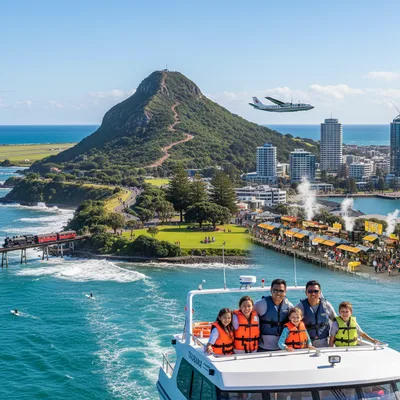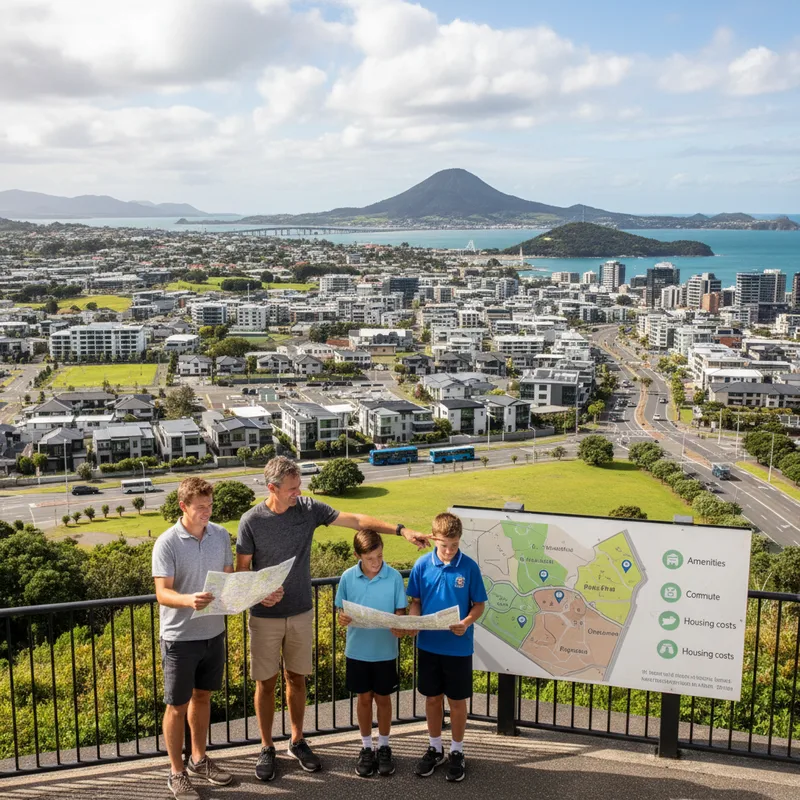
Tauranga’s growth story is no longer a headline, it’s a lived reality, in school enrolments, morning traffic, and cranes on the skyline. For people planning a move in 2026, the hard part is not deciding whether Tauranga is appealing, it’s choosing which side of the harbour, which school zone, and what trade-offs you can live with on price, commute and housing type.
This guide breaks down the character, amenities, transport links and realistic cost expectations across Tauranga’s most searched suburbs and neighbourhoods. Prices vary street to street and change quickly, so think of the figures below as “ballpark” ranges, then use them to shortlist areas before you inspect, check hazard overlays and talk to locals.
We also flag a few Tauranga realities that newcomers underestimate, including congestion on key routes, the practical difference between “near the beach” and “easy to get to work”, and why intensification is reshaping inner suburbs like the Avenues and Te Papa.
Best Tauranga suburbs for families in 2026
Where families tend to start looking: Bethlehem, Otumoetai, Matua, Papamoa and parts of Welcome Bay. The common wish list is familiar, good schools, parks, a safe feel, and a manageable commute to Tauranga Hospital, the CBD, or Mount Maunganui.
Bethlehem has a polished, established feel, strong retail convenience around Bethlehem Town Centre, and quick access to State Highway 2 for Hamilton and Auckland trips. Expect a mix of 1990s to 2000s family homes and some newer infill. Indicative purchase range: many three to four-bedroom homes sit roughly in the high $900,000s to $1.3m depending on size and finish. Key amenity: Bethlehem Town Centre, 19 Bethlehem Rd, Tauranga. Hours: typically 9am to 6pm weekdays for many stores, later for supermarkets.
Otumoetai and Matua are among the peninsula’s most consistently popular family picks, for their centrality, greenery, and access to estuary walks. Tauranga City Council describes the Matua-Ōtūmoetai ward as bounded by the Waikareao Estuary and harbour, with existing infrastructure, parks, schools and transport links in place. Council’s neighbourhood overview is a useful starting point. Indicative purchase range: often $1.0m to $1.6m+ depending on water proximity and renovation level. Watch for: older housing stock, varying insulation, and some aircraft noise depending on exact location.
Papamoa remains a go-to for beach-loving families who want newer homes and a flatter lifestyle. The pay-off is that many households are car-dependent, and peak-hour travel toward the city and Mount can be slow. Indicative purchase range: commonly $900,000 to $1.4m for modern family homes, with premium pricing closer to the dunes and in newer subdivisions. Weekend staple: Papamoa Hills Regional Park, Papamoa Hills Rd, open daily, standard DOC rules apply.
Welcome Bay is where many buyers and renters look when they want more house for their money. It has grown quickly with subdivisions and new builds, and it is also more exposed to weather-driven events than some other areas. For a reminder of how quickly conditions can change, see our coverage of the Welcome Bay tornado. Indicative purchase range: often $800,000 to $1.2m, with newer builds sometimes higher. Commute reality: getting over the bridge and through city bottlenecks can add time in peak periods.
Best Tauranga suburbs for commuting to Mount Maunganui
If your job is in “the Mount”, travel time should shape your search as much as school zones. A 10km distance can still be a 35 to 55-minute drive on the wrong route at the wrong hour.
Mount Maunganui is the obvious choice if you want to walk or bike to work, plus beach access on your doorstep. The trade-off is price, and a strong holiday-rental vibe in some pockets. For those considering relocation, check out this guide to moving to Drew County, AR. Indicative purchase range: often $1.2m to $2.5m+ depending on whether you are near the surf beach, harbour, or in apartments. Local hub: Bayfair Shopping Centre, 19 Girven Rd, Mount Maunganui, generally 9am to 6pm weekdays (varies by store).
Arataki sits between the Mount and the city and often offers better value than Mount Maunganui proper while keeping commutes reasonable. It is practical rather than glamourous, with easy access to Bayfair, sports grounds and arterial routes. Indicative purchase range: often $850,000 to $1.3m.
Matua and Otumoetai can be a strong compromise for people working in the Mount but wanting a quieter, greener suburb that still feels central. The harbour bridge is the pinch point, so trial your commute at your actual work start time before committing.
For people commuting out of Tauranga for weekends or work trips, keep State Highway safety in mind. Our reporting on a fatal SH29 crash is a sobering reminder that the Kaimai route can be unforgiving in poor conditions.
Cheapest Tauranga suburbs and where you get more house for your money
“Affordable” is relative in a city with sustained demand, but there are still areas where first-home buyers and renters tend to find better bang for buck.
Welcome Bay and parts of Greerton and Gate Pa can offer lower entry points than the peninsula or beachfront suburbs. In these areas, you are more likely to find 1970s to 1990s houses, cross-leases, and properties needing insulation or maintenance work. Indicative purchase range: in 2026 budgeting terms, many buyers start looking from the mid to high $700,000s for a standalone home, with plenty of variation by street.
Te Puke (outside Tauranga city) is another option for space and price, especially for those working in horticulture or prepared to commute. It is a different lifestyle, more provincial, less “Tauranga proper”, but it can be a value lever for some households.
Rental reality: Tauranga’s rental market is tight and competitive. Property managers point to infrastructure and job growth as ongoing demand drivers into 2026. Use that as a signal to get organised early with references and proof of income, particularly if you are arriving from out of town.
Best Tauranga suburbs for amenities, cafes and shopping
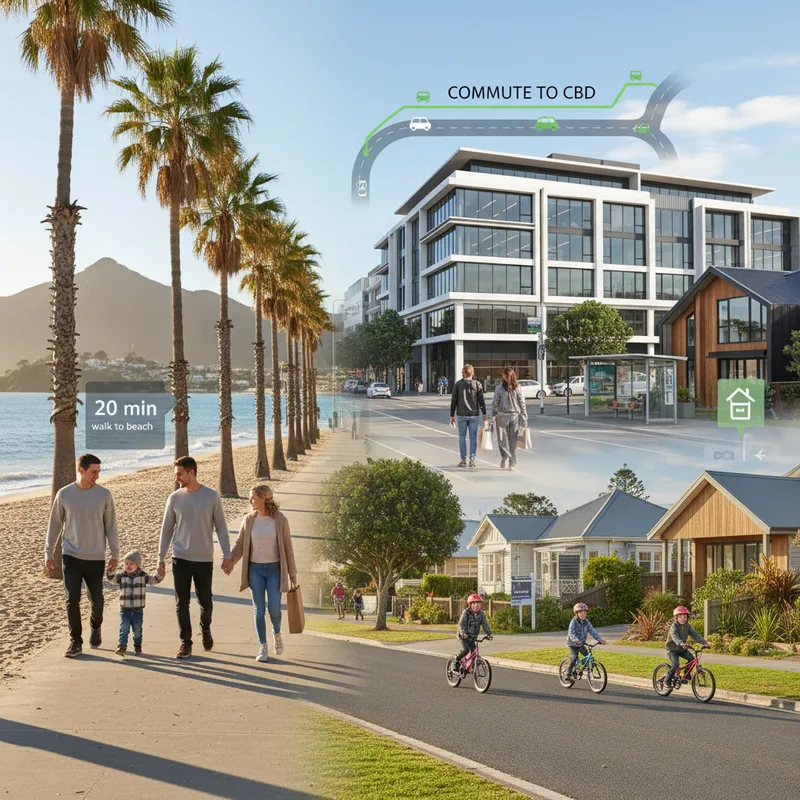
When newcomers say they want “convenience”, they often mean walkable errands, gyms, cafes, libraries and after-school activities without a 20-minute drive.
Tauranga CBD and the Avenues are the best fit if you want city life, older character homes, and fast access to restaurants, the waterfront and civic amenities. Bayleys notes that after years of underinvestment, the CBD is seeing a visible lift, with new residential towers, private developments and council-backed upgrades, including a new library and a convention centre in the wider mix. The median sale price cited for central city Tauranga over the last 12 months to April 2024 was $975,000, according to Bayleys. (Source.)
The Avenues sit as a long belt between the CBD and Memorial Park, with a grid of streets and a growing number of townhouse and apartment projects. The further you are from the CBD end, the more price pressure tends to ease. Indicative purchase range: often $850,000 to $1.4m, depending on whether you are buying an older villa, a renovated bungalow, or a new townhouse.
Gate Pa and Greerton are “everyday convenience” suburbs, with supermarkets, takeaway strips, schools, and easy access toward the hospital. They do not have the harbour glamour of Matua or the surf vibe of the Mount, but plenty of locals value them for practicality.
If your weekends are a big factor in where you live, start with our ultimate guide to 50+ things to do in Tauranga (2026), then work backwards to see which suburbs put you closest to your favourite beaches, walks and clubs.
Tauranga suburbs to watch for growth and new developments
In 2026, the biggest change across Tauranga is not a single shiny project, it’s the shift toward more townhouses, apartments and mixed-use development in places that used to be mostly detached homes.
Tauranga CBD is at the centre of the “live near work” push. Bayleys points to developments like Elizabeth Towers bringing apartment living, concierge-style amenities, a residents’ lounge, gym and communal gardens to the city centre. Even if you do not plan to buy an apartment, more residents in the CBD can lift cafe, retail and evening activity, which changes the feel of nearby streets.
The Avenues and Te Papa are also likely to keep intensifying. For movers, that creates opportunities, newer builds closer to town, but also disruption from construction, parking pressure, and changing streetscapes.
Tauriko and the western corridor are the other growth story, tied to industrial jobs, big-box retail and roading upgrades. If you work in logistics, warehousing or building supply, living near Tauriko can be a quality-of-life win.
On transport demand, it is worth noting how quickly seats vanish when Tauranga gets a taste of new connections. The Kaimai Express selling out in 48 hours is one signal of how much appetite there is for alternatives to driving, especially for Hamilton and Auckland links.
Flooding, tsunami zones and other risks to check before you buy or rent
Tauranga is a harbour city with low-lying areas, estuaries and coastal strips. That is part of the appeal, but it also means you should treat hazard checks as non-negotiable.
Tsunami and coastal hazard mapping: Start with the latest official maps and guidance. Our reporting on Bay of Plenty tsunami zones shifting explains what changed and why. You can also cross-check with National Emergency Management Agency guidance for planning and alerting.
Flood-prone streets: Some parts of Papamoa and low-lying coastal areas can be susceptible during heavy rain and king tides. Ask for the LIM, check council hazard layers, and talk to neighbours about what happened in the last big downpour.
Weather events: Tauranga gets wild weather swings. The tornado that hit Welcome Bay is a reminder to review insurance settings and understand what “stormwater” means on your section, especially if you are buying at the bottom of a slope.
How to choose the right Tauranga suburb for your budget and lifestyle
To move from “browsing suburbs” to a confident decision, work through a simple shortlist process.
- Do three commutes, at your real start and finish times. Don’t guess.
- Pick your non-negotiable amenity, beach access, hospital proximity, school zone, or a flat walking loop.
- Decide your housing type, older character home, modern build, townhouse, or apartment.
- Check hazards early, tsunami, flooding, and slips before you fall in love.
- Budget for rates and insurance, especially near water.
Finally, spend a Saturday morning in your top two areas. Buy a coffee, visit the local shops, walk the parks, and listen. You will get a feel for whether a suburb is quiet, family-heavy, student-heavy, or more transient, and that “character” matters as much as a floor plan.
For a sense of local community life, including civic events, see our coverage of Tauranga combining Anzac Day civic services, it is a small example of how the city’s traditions are evolving alongside its growth.
Cross-read: If you’re moving with a dog and want a practical “parks and routines” checklist, this cross-site guide is a good model of what to look for in a neighbourhood: The ultimate guide to dog-friendly Willowbank.